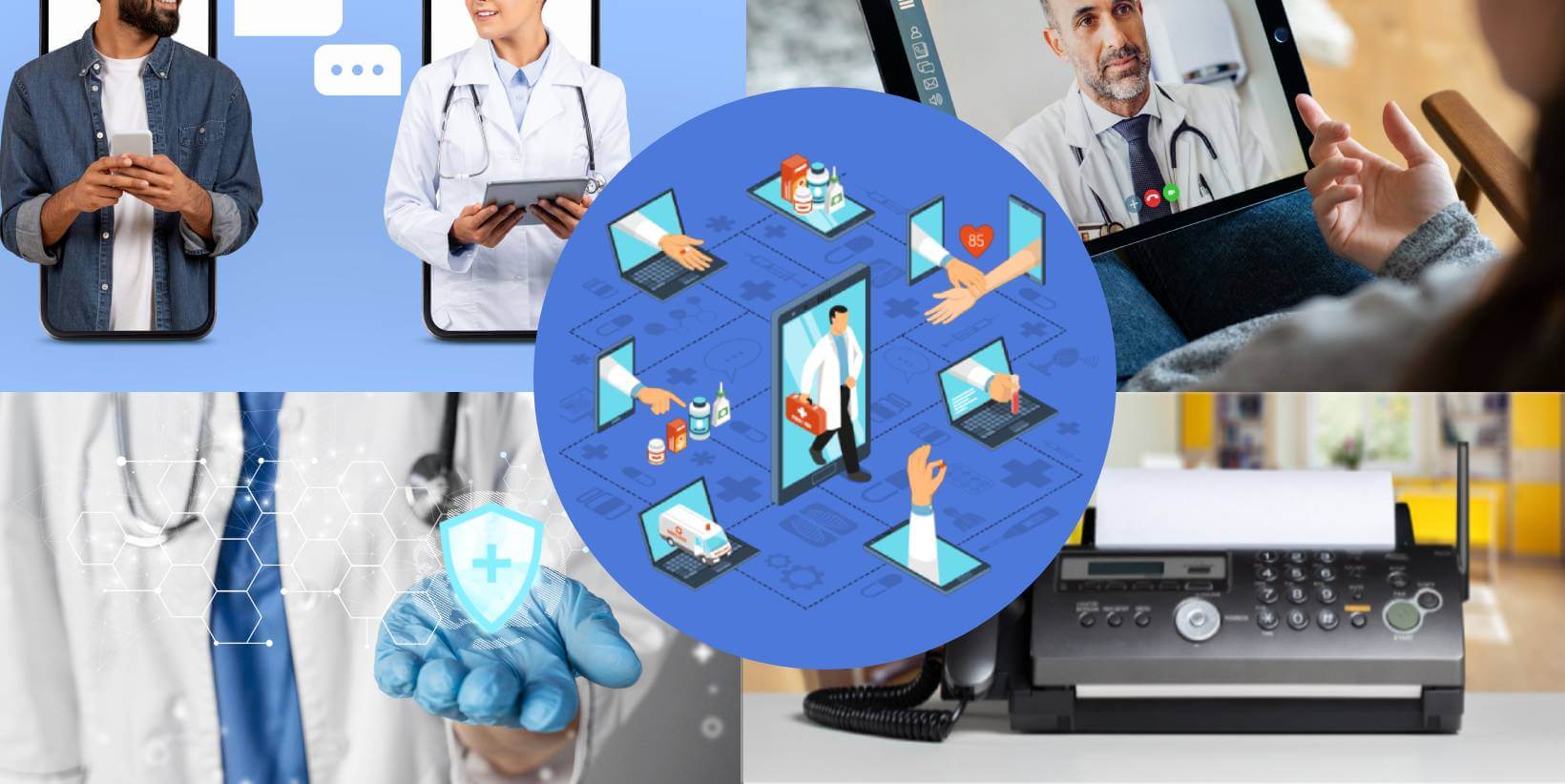
In healthcare, every second counts. Good face-to-face communication is not enough when staff are spread across hospitals, clinics, long-term care and patients’ homes. Teams need secure, real-time communication, in groups and one-to-one.
An all-in-one healthcare communication platform is how most organizations get there. There are thousands of products to choose from. These six features are the ones to check first, along with how well each platform supports secure collaboration, real-time information sharing and your existing clinical workflows.
Current challenges in the home healthcare industry
Communication is hard in home healthcare. Staff are in the field, so sharing and discussing patient information takes more effort. Communication between professionals, caregivers and patients often fragments, and patients feel it when coordination slips.
Scheduling, onboarding, care coordination and patient communication all get harder as visit counts grow. Texting protected health information (PHI) from a personal phone does not meet HIPAA. And while the electronic health record (EHR) holds the patient’s history, a care team of staff, operations, nurses and physicians still needs a way to ask questions and clarify in real time.
How a good communication platform benefits home healthcare
Better team communication benefits providers and patients alike, from the speed and quality of care to operational costs and staff burnout. A secure platform can support:
- Lower operational cost and room for more patient volume.
- Faster onboarding.
- Patient satisfaction and the star ratings that follow it.
- Care continuity that cuts avoidable re-admissions.
- Less exposure to HIPAA violations, fines, breaches and fraud.
- Streamlined workflows for care delivery plans.
- More accurate documentation and record sharing.
- Connection to EHR systems.
- Real-time secure messaging, fax, phone calls and more.
- Accountable group collaboration across every role.
- Telehealth for more efficient patient care.
- Groups that deliver responsive, patient-centered care.
6 features that improve patient care
Good healthcare communication is more than a phone call or a message. It is a shared space where providers deliver better care, work more efficiently and communicate across departments. Look for these six.
1. Real-time communication tools on every device
Slow channels such as email and voicemail hold collaboration back. Teams should be able to reach each other in groups or one-to-one by chat, group conversation, video, voice and secure fax. The platform should run on desktop and mobile, across iOS, Android, Windows and macOS, so each person works the way they already do.
Care teams are rarely just two people. They include referring partners, administrative staff, doctors, nurses, specialists, caregivers and often family members. The essentials are secure messaging, file sharing, document signature and annotation, and group conversations, all encrypted, so everyone involved in a patient’s care can communicate openly and PHI stays protected.
2. Call-backs, phone dialer and caller ID
When care happens outside a facility and a caregiver cannot reach a patient, health and satisfaction suffer, and so does the number of patients seen in a day. A call from an unknown personal number may be ignored or flagged as spam, which costs more time.
The fix is a phone dialer with custom caller ID. Staff use any phone they like but place calls through the app’s dialer, and every outbound call shows a dedicated organization number and name instead of the staff member’s own. Patients, caregivers, providers and partners can see the call is from the agency. More calls answered means more patients seen.
3. Security and compliance
Protecting patient information is a legal requirement. Consumer messaging apps and SMS do not meet it, even when they advertise encryption, and getting this wrong brings fines and lost trust.
Check that messages and files are encrypted in transit and at rest, and that strict access controls limit data to authorized users. HIPAA compliance and a signed business associate agreement (BAA) are non-negotiable, especially for home healthcare teams handling PHI in many settings. Look for auditing and monitoring that track access and use, and ask vendors for independent attestation of their controls. See the Buzz security features.
4. Workflow optimization, automation and task management
Providers carry heavy administrative work alongside patient care. Workflow tools such as e-signature and document editing speed up intake, record updates and billing, and leave more time for patients.
Home healthcare staff juggle many patients at once. File sharing that handles audio, video, documents and images, in the field or the office, saves time and keeps that content inside a compliant system.
5. Real-time care plan updates
Care management changes as the patient does. Providers need to adjust care plans as new data, lab results or changes in condition come in, and to document observations on the spot.
That matters most in home healthcare, where a visit can turn up something unexpected. Quick updates keep the plan matched to the patient and keep patients informed and involved in their own decisions.
6. Telehealth and telemedicine support
Telehealth is now an expected part of care. A platform with telehealth built in lets providers run virtual consultations, follow-ups and urgent assessments in the same system they already use. In home healthcare, an in-person visit is not always possible or timely.
Specialists can join a consultation, so primary providers get expert opinions in real time. Patients with mobility issues, chronic conditions or long travel distances get care at home. Look for video, voice and secure messaging together, so each patient and provider can use the mode that fits.
Choosing a communication platform clinicians will use
Pick a solution that is easy to adopt, serves your whole staff, works with partners outside your organization, connects to your EHR and runs on any device. It must be HIPAA compliant and secure. Ask for reviews, ratings and customer examples, and check how quickly a new user gets productive.
About Buzz
Buzz from Skyscape is a real-time HIPAA-compliant clinical communication and collaboration platform on desktop, tablet and phone. It maps to each of the six features: BuzzChat for one-to-one and group messaging, BuzzSpace for care team groups, BuzzPhone for a Buzz number and caller ID, BuzzFax, BuzzDrive for files, BuzzFlow for e-signature, BuzzVideo for video visits and BuzzLink so patients and families can join with nothing to install. EHR and other systems connect through BuzzStreams. Messages and files are encrypted in transit and at rest, Skyscape signs a BAA, and Skyscape holds a SOC 2 Type 2 attestation covering the Security trust services criteria. The Buzz FAQ answers the common questions.