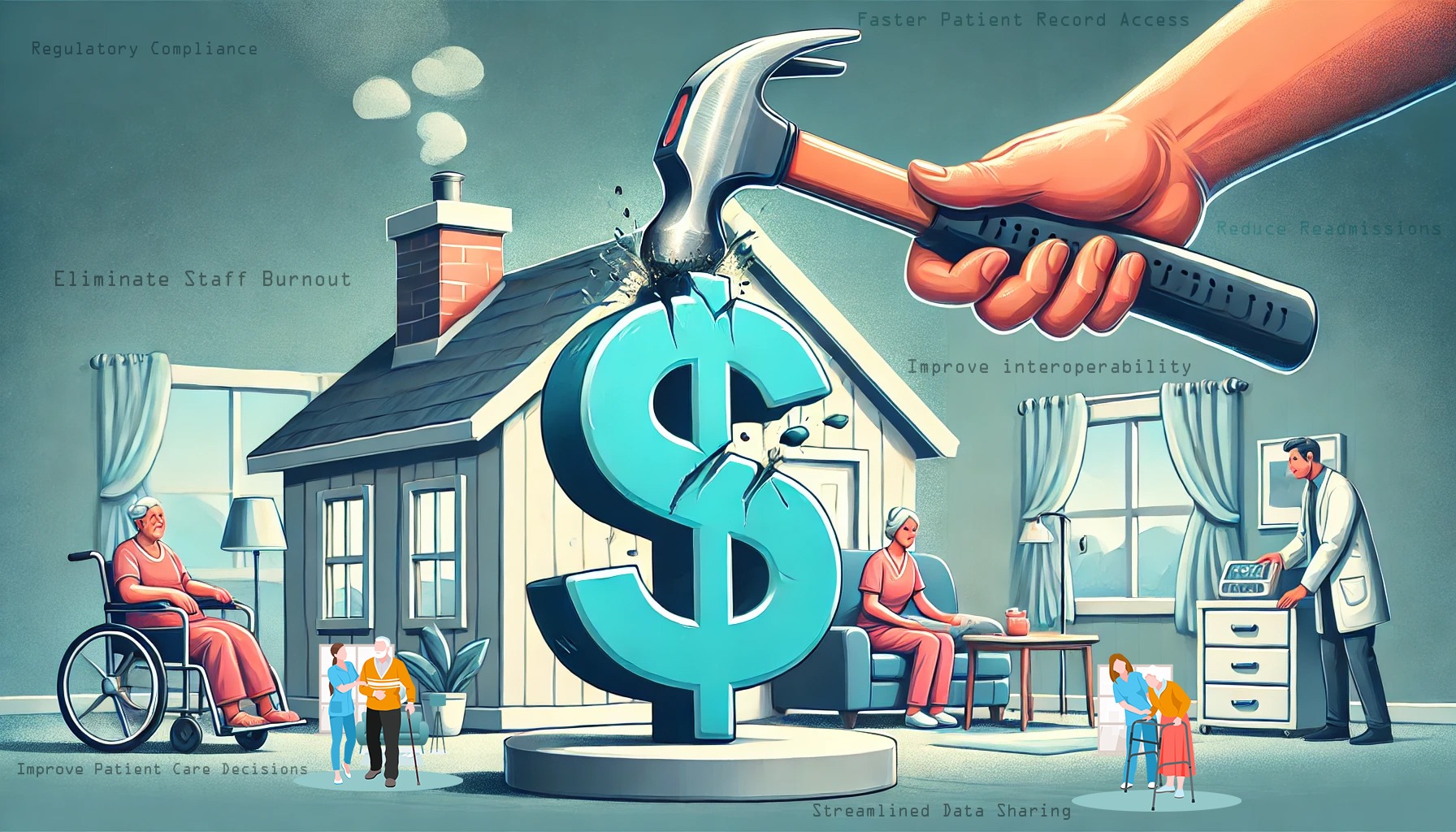
Delays, duplicate work and errors all cost money. Digital collaboration tools cut each of them by getting the right information to the right person sooner.
Understanding the cost benefits of collaboration in healthcare
According to the World Health Organization, global health spending reached $9.8 trillion in 2021, 10.3% of world GDP. Each year $1.8 trillion of that brings little or no improvement in health outcomes. The pandemic shaped those numbers, and they also reflect inefficiency that adds cost without benefit. Removing it could save as much as $1 trillion a year in the United States alone. Here is where collaboration tools come in.
7 ways to reduce operational costs in healthcare with digital collaboration
Collaboration tools simplify operations. They cut administrative work, reduce duplicated effort and shorten response times, which improves care and lowers cost at once. Better coordination also helps prevent avoidable readmissions, one of the larger long-term costs.
1. Increases accuracy of patient records
EHRs are far more accurate than paper, but information still gets missed without real-time communication. Collaboration tools close the gap. A surgeon or physician can get a message the moment a patient’s lab results arrive, which reduces delayed care and redundant tests, and the cost that comes with them.
2. Improves patient care and decision-making
Research on more than 190,000 hospitalizations across 15 US hospitals found that patients who needed intensive care but were placed in general wards stayed longer and were readmitted more often. That drives up cost and worsens outcomes.
Real-time information lets providers decide sooner. Early intervention can keep a condition from worsening, reduce the need for intensive care and shorten stays.
3. Reduces readmission rates
Readmissions often come from miscommunication, incomplete follow-up or a rough handoff from hospital to home. Secure messaging and video visits keep providers connected to patients after discharge, so they can track progress and step in before a complication becomes a readmission. Consistent contact also helps patients follow discharge instructions and medications.
4. Enhances data sharing, communication, and collaboration
Communication and collaboration among physicians, nurses, surgeons and lab technicians is one of healthcare’s hardest problems. Delays in getting results mean missed chances to intervene early and more expensive treatment later. A shared system across hospitals, home-based care and outpatient clinics keeps information moving.
Sharing patient information in real time reduces duplicated tests, conflicting treatments and errors, and lowers operating cost.
5. Improves interoperability between departments and organizations
When departments or organizations cannot see the same patient data, they duplicate tests, give conflicting treatments or miss something critical. Collaboration tools that connect departments and organizations make the data available to everyone who needs it, which improves coordination at a lower cost.
6. Decreases staff workload, reducing burnout on administrative tasks
Demand for care keeps rising, and more patients mean more administrative work. Burnout drives turnover and affects both staff and patients, and all of it adds cost.
Collaboration tools lighten the load on data entry, scheduling and documentation. Online scheduling and automated administrative steps give providers more time for care, and that time is a real saving.
7. Enhances regulatory compliance, reducing the risk of legal fees
US providers are subject to strict rules such as HIPAA. Non-compliance brings fines, legal costs and lasting damage to reputation. Used well, collaboration tools help with built-in checks, automated alerts and encryption for patient data. Look for two-factor authentication, encryption, access controls and audit tools.
How to choose the right digital collaboration tool for your healthcare organization
The right tool meets today’s operational needs and supports the long-term goals: better outcomes, streamlined workflows and lower costs.
- Identify your organization’s needs.
- Look for tools that address those challenges directly.
- Check that the tool connects to your existing systems.
- Evaluate how easy it is to use, with an intuitive interface and settings you can adjust.
- Treat security and HIPAA compliance as non-negotiable.
- Look for room to scale.
- Assess the support offered and the training required.
- Evaluate cost-effectiveness.
- Look for analytics.
Where Buzz fits
Buzz is a HIPAA-secure communication platform that puts care teams, patients and partners in one place. BuzzChat carries messages, images and reports in real time. BuzzVideo and BuzzLink keep patients and families reachable after discharge, with nothing for them to install. BuzzScheduler handles scheduling, and EHR and other systems connect through BuzzStreams. See the HIPAA-secure communication features, or the Buzz FAQ.