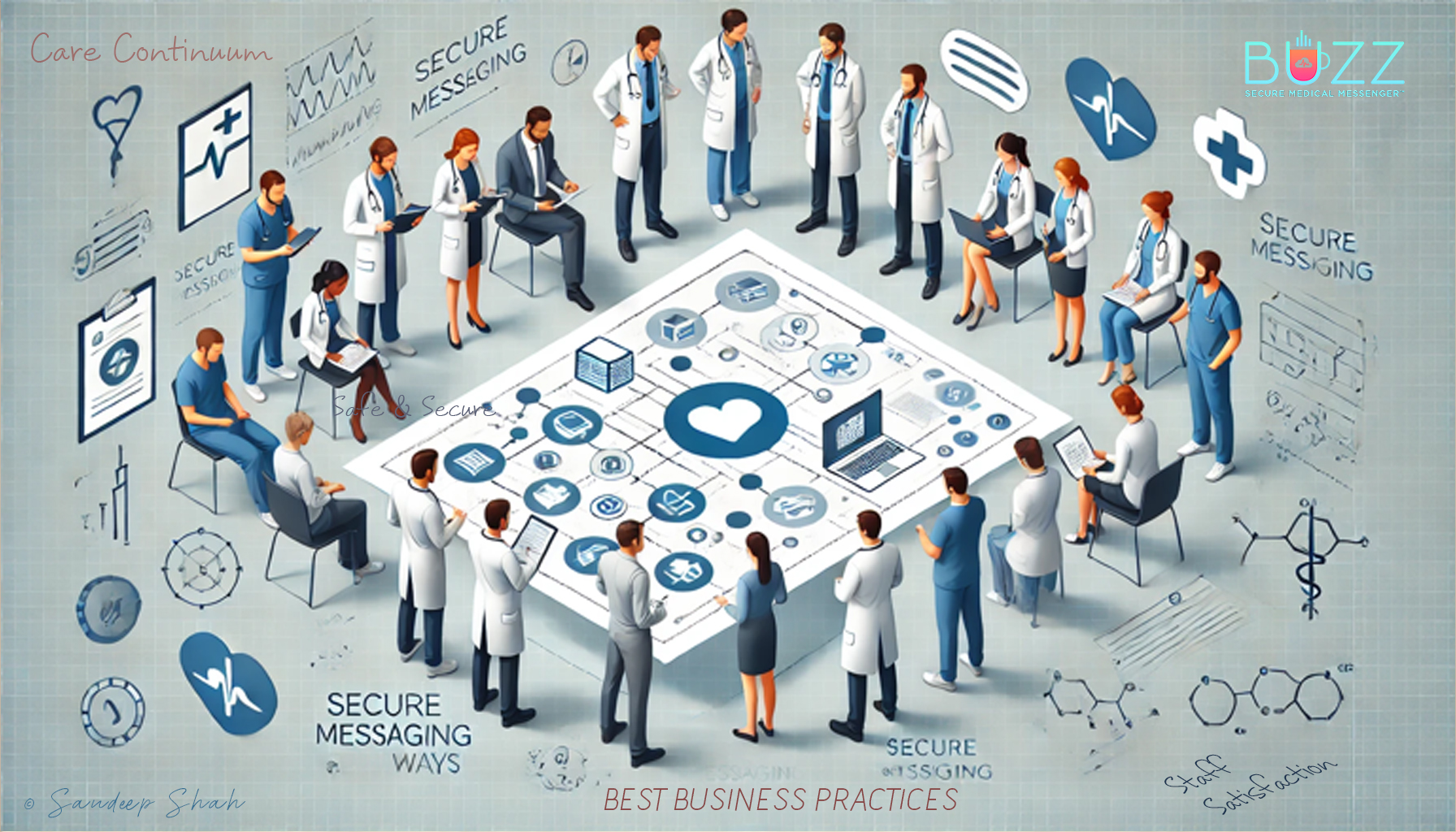
Clinicians text because it is fast. A text gives patient information no privacy and no protection. Secure instant messaging keeps the speed and adds both.
Healthcare professionals work under pressure, and a timely message can change what happens to a patient. Some consumer apps encrypt messages and many do not, and none of them was built around HIPAA. That gap is what a secure messaging platform closes.
The need for secure healthcare messaging
Care depends on fast, reliable group communication. Immediate access to information shapes outcomes, and messaging links professionals and departments across shifts, so fewer details fall through.
Picture a nurse who needs to tell a doctor about a sudden change in a patient’s condition and cannot reach them. Delays like that put patients at risk, and communication errors are behind many preventable harms.
The truth about messaging in healthcare facilities
Many facilities still have no secure messaging, or rely on software that is complicated or outdated. In one survey, 97% of respondents admitted sending patient information over a consumer messaging app, which is not HIPAA compliant. And 30% or more believe plain SMS meets HIPAA. It does not.
Without secure messaging, PHI, cybersecurity and confidentiality are all at risk. Unencrypted messages invite breaches and unauthorized access, which violate patient privacy, erode trust and can cost a facility millions and its reputation in the community.
What makes a messaging app secure?
Healthcare messaging should meet these measures:
- User authentication. Only authorized staff can sign in. Two-factor authentication adds a layer.
- Encryption in transit and at rest. Messages cannot be read if they are intercepted on the way or taken from a server.
- Access controls on conversations. Each message is visible only to the people it was meant for.
These measures protect the confidentiality, integrity and availability of ePHI. They should cover every type of content: messages, images, video, documents and voice notes.
Are disappearing messages secure?
Disappearing messages are often treated as extra security, but they work against care. Doctors, nurses and caregivers need to look back at PHI, ask follow-up questions and review the thread. A self-destructing message is not a safety feature for a care team.
Personal devices
Security matters even more on personal phones, and few organizations will issue a second work-only device. If a phone is lost or stolen, you need to know how the patient information on it can be wiped remotely.
The benefits of HIPAA-compliant secure messaging
Whatever platform you choose, it has to meet HIPAA. Compliance is only the start of what it gives you:
- Coordination. Real-time communication and collaboration across the care team.
- Data security. Encryption and access controls protect patient information.
- Regulatory compliance. Meeting HIPAA helps avoid fines and legal issues.
- Workflow. Simpler communication with fewer errors.
- Fewer misunderstandings. Clear, direct messages.
- Patient care. Quicker decisions and timelier interventions.
- Audit trails. A record of communication for accountability.
- Accessibility. The team can communicate from anywhere, which shortens response times.
- Confidentiality. Only authorized staff see patient information.
- Emergency response. Faster coordination when it counts.
Best practices for rolling out secure messaging
Encryption is one layer, not the whole defense. If you are adopting a secure messaging platform, add these:
- Train staff on secure messaging protocols and on current phishing techniques.
- Require a passcode on every phone, and never leave one unlocked and unattended.
- Connect messaging to your other healthcare IT systems.
- Set clear policies for messaging apps covering data security, patient confidentiality and compliance.
- Keep messaging apps updated so they use current encryption.
- Prevent caching of sensitive data, and encrypt servers and wireless connections.
- Use two-factor authentication wherever PHI is involved.
- Keep disappearing messages, if you use them, to non-clinical conversations.
- Review your messaging setup regularly and update it as threats change.
- Never install unknown software, especially from an email.
Buzz for secure messaging
Buzz is a HIPAA-ready platform for real-time, on-the-go communication between healthcare providers, built for teams who need to reach each other around the clock. Messages in BuzzChat are encrypted in transit and at rest, and the same platform carries private calls in BuzzPhone, video in BuzzVideo, and images and reports in BuzzDrive. Skyscape signs a BAA. The Buzz FAQ answers the common questions.