Quick overview
A healthcare communication platform connects care teams and patients securely and makes care coordination faster. What a good one gives you:
- Secure, HIPAA-compliant communication. Real-time messaging, voice and video with patient data protected.
- Better care coordination. Care teams, patients and partners in one place.
- Stronger patient engagement. Easier access to information, scheduling and telehealth.
- Operational efficiency. Fewer delays, manual tasks and fragmented workflows.
- Room to grow. Adapts to different care settings, workflows and growth.
The right choice lets you deliver timely, coordinated care without giving up security or compliance.
Why communication platforms are critical to modern healthcare
In 2009 the HITECH Act pushed providers toward electronic health records, through incentive programs run by the Centers for Medicare and Medicaid Services (CMS) with the Office of the National Coordinator for Health IT. Healthcare data breaches have climbed since. In 2023 there were 725 breaches of 500 or more records in healthcare. Patients still want digital care: in one survey on routine mental healthcare, 94% of people who had used telehealth said they would use it again, for convenience, faster care and easier access to their information.
Physicians see the benefits too, and many worry about data security and patient privacy. That leaves one question for every facility: how do you give staff and patients a strong communication platform, stay HIPAA compliant and keep breach risk low? Here is how to find a secure, customizable one.
Evaluating your current communication channels
Digital transformation in healthcare takes many forms. Some facilities use messaging apps; others rely on digital platforms for records and care coordination. When did you last compare what you need with what you have?
There is no one-size-fits-all platform. It should be secure and customizable so your clinicians get the most from it. Look at two things: the effect on patients, and internal collaboration.
Assess patient engagement and communication
First, ask whether your current system takes strain off patient care. Patients should be able to reach their health information and get personalized guidance on your network, so they can manage their health, book visits and join telehealth sessions in real time. A communication platform should improve the patient experience and outcomes.
Consider internal collaboration
Next, check how secure your internal messaging is. Is it encrypted in transit and at rest? Does it meet every HIPAA requirement? If so, does it actually help teams collaborate?
A strong platform lets internal teams set up their own workflows and share them with other departments when needed. Built-in AI that takes on routine work can give physicians more time with patients; check what a platform actually automates.
The importance of a strong communication platform
Healthcare holds millions of patient records, each full of sensitive detail. Patient confidentiality is the cornerstone of healthcare ethics, and strict laws protect it. That is why secure channels matter.
A secure medical communication platform closes communication gaps and supports privacy, coordination and efficiency. It can help you:
- Reduce inefficiencies.
- Collaborate better in groups and one-to-one.
- Bring together patient data from imaging, labs, history and physicals.
- Deliver timely, coordinated care.
- Cut delays caused by communication problems.
- Keep physicians aligned on patient status.
- Remove workflow roadblocks.
- Shorten time to treatment.
- Get input from the whole care team in real time.
- Exchange care plans across state lines.
- Support continuing education and training.
- Coordinate emergency response.
- Streamline and automate administrative work.
- Strengthen compliance and audit trails.
Communication in healthcare needs more than basic messaging. Above all, it has to protect patient data and strengthen cybersecurity.
Other benefits of secure communication platforms
Lower operational costs
Separate tools for scheduling, patient communication, internal messaging, payments and records cost money and confuse care teams. One communication and collaboration platform that combines the essentials can lower overhead and simplify the work.
Better use of staff time
Sharing information without clutter frees time otherwise spent on appointments, record-keeping and follow-up. Automation that handles routine work lets doctors, specialists and nurses focus elsewhere.
A better patient experience
Patients who reach their providers through digital channels tend to report a better experience. Seeing their own information from home and booking visits easily builds a positive association with your facility, and secure appointment reminders mean fewer missed visits. A better experience can bring more referrals and better ratings.
Stronger patient outcomes
Patients who are proactive about their health tend to do better. When it is convenient, they book more preventive visits and follow up more often. Online appointments and telehealth take the stress out of a trip to the doctor.
Better patient connections
Many people who use telehealth find it connects them with their physician better than in-person visits, mostly because they can check in more often than a yearly physical. Direct messaging lets patients ask questions in real time and feel heard.
How to choose the right healthcare communication platform
Whether you run a clinic, a hospital, a medical office or a home care agency, look for these features.
HIPAA compliance
Every communication platform used in healthcare must meet HIPAA. That includes the safeguards HIPAA requires for the confidentiality, integrity and availability of protected health information, and a signed business associate agreement (BAA) with the vendor. It is non-negotiable for patient privacy and legal protection.
Encryption in transit and at rest
Encryption turns messages into code that only authorized users can read. In transit protects a message as it crosses a network. At rest protects it on servers and backups. Together they keep patient information confidential and protected from interception.
Two-factor authentication
Two-factor authentication asks users to confirm who they are a second way, such as a code by text or an authenticator app, on top of a password. A stolen password alone no longer gets someone in.
Transparency through audit logs
Audit logs record activity on the platform: access to patient data, messages exchanged and system changes. They give you accountability, let you monitor use and spot possible breaches, and support compliance reviews.
Easy to use
Adoption depends on ease of use. The system should be intuitive and need little training for staff or patients. Simple messaging, easy file sharing and accessible support all encourage everyday use. It should make work easier, not harder.
Convenience paired with security
The right platform balances ease of use with strong security. Clinicians need fast messaging that does not cut corners on protection. A clear interface, simple navigation and a good fit with existing workflows make that possible.
Scalability
A scalable platform grows with your organization. New services, more users or new technology should not cost you performance or security.
Regular data backups
Backups protect against loss from system failures, cyberattacks and other surprises. The platform should back up automatically and securely, so critical data can be restored quickly and downtime stays short.
About Buzz
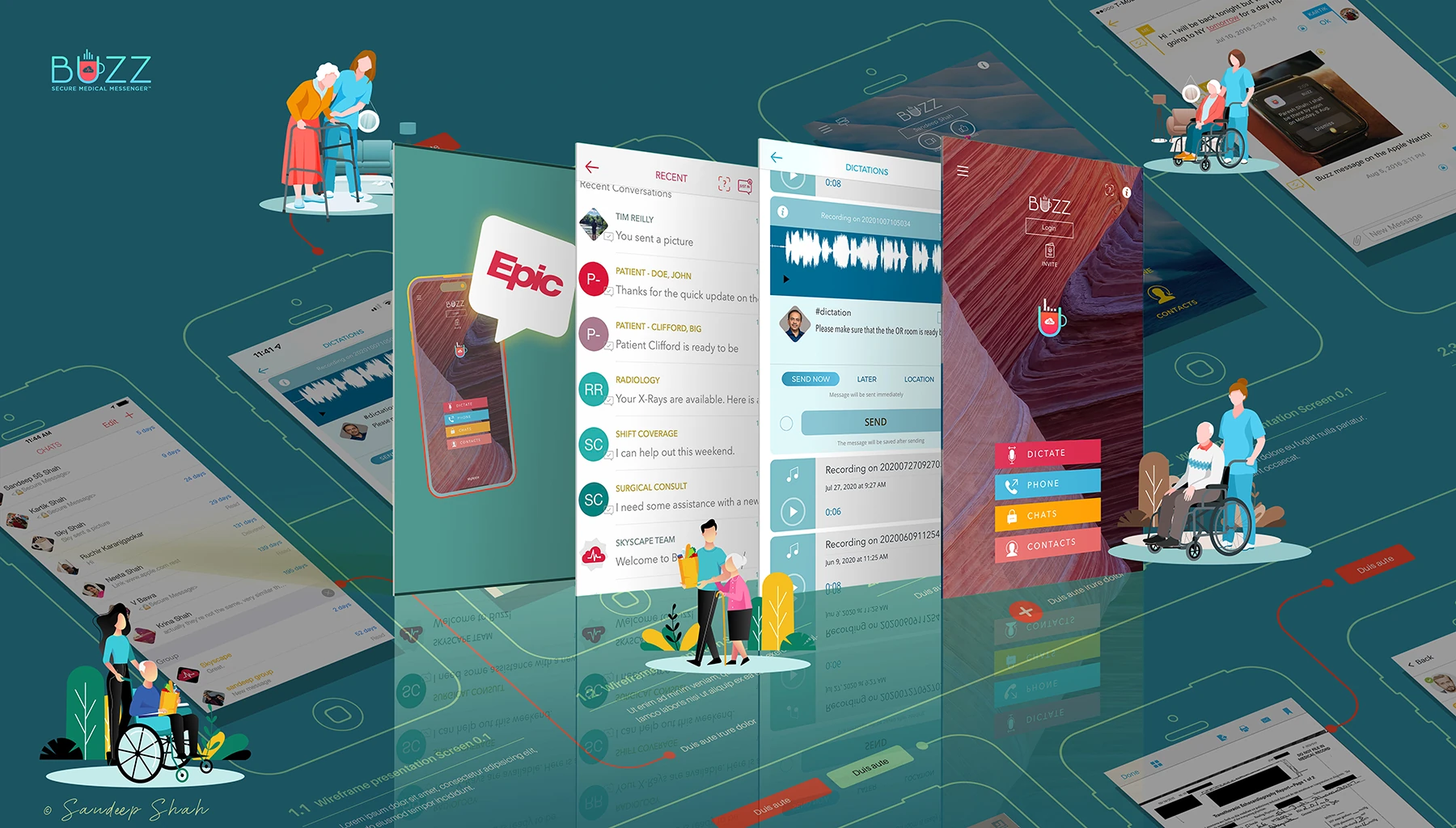
Communication keeps a healthcare facility running, and it should not put staff or patients at risk. Buzz from Skyscape is a communication and collaboration platform for continuous care coordination, with access limited to authorized users. Secure messaging in BuzzChat, file sharing in BuzzDrive, e-signatures in BuzzFlow, video visits in BuzzVideo and clinical answers from Skyscape’s licensed reference in BuzzLightning sit in one customizable platform. Messages and files are encrypted in transit and at rest, and Skyscape signs a BAA. See the HIPAA-secure features or the Buzz FAQ.