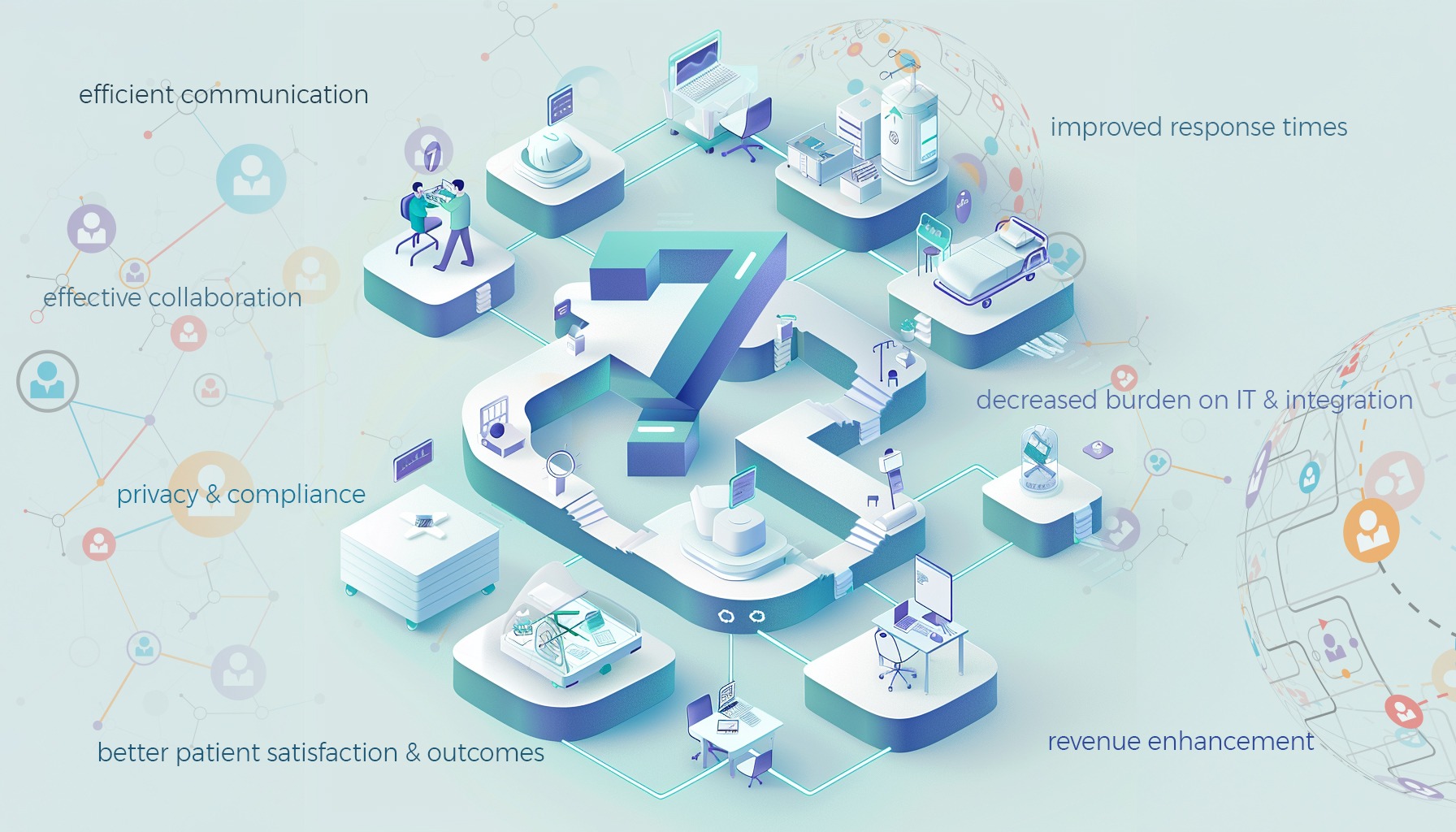
A clinical communication platform gives a care team one secure place to message, coordinate, get alerts and collaborate, connecting clinicians, administrators, patients and support staff.
The benefits at a glance
- Faster team communication. Real-time messaging, voice and video.
- Better care coordination. A shared platform aligns care activity and cuts misunderstandings.
- Stronger patient safety. Clear communication reduces errors.
- Operational efficiency. Centralized communication and automated workflows reduce manual work.
Why it matters
In 2022, US health spending was about $13,493 per person, roughly 17.3% of GDP, according to the CMS National Health Expenditure Accounts. Inefficient processes, complicated technology and communication problems all add to that cost. Better communication protects patients, improves efficiency and brings cost down.
What a clinical communication and collaboration platform is
It is a specialized digital tool for communication and teamwork among healthcare professionals. It streamlines information sharing, replaces the patchwork of pagers, faxes and consumer messaging apps, and works as both a medical communications platform and a place to collaborate. See how to simplify your communication platform.
What the software does
- HIPAA-ready secure messaging.
- Department or team group chats and channels.
- Collaboration across disciplines.
- Custom notifications for staff and patients.
- Protected voice calls with staff or patients.
- Video conferencing for telehealth.
- Task assignment and tracking, connected to the EHR.
- Sharing of patient records and imaging.
- Real-time patient updates and shared treatment plans.
- Automated alerts for abnormal results or emergencies.
The seven benefits
1. More efficient communication across the organization
A Harvard Risk Management Foundation report put the cost of healthcare miscommunication at $1.7 billion. A platform replaces pagers, faxes and non-secure messaging with instant, centralized, secure messaging, and real-time communication cuts miscommunication, especially at patient handoffs. See secure instant messaging for healthcare professionals.
2. Departments that work as one
Silos mean departments wait on each other: lab results, treatment plans and referrals all slow down. A shared platform links administrators, nurses, doctors, surgeons, labs, radiologists, home care and pharmacy, so records, lab results, EVV data and treatment plans reach every provider. Learn how to break down these silos.
3. Patient privacy and HIPAA compliance
Non-compliance carries legal and financial consequences. A purpose-built platform brings secure messaging, encryption in transit and at rest, and controlled access, so an organization can focus on care. Staff can reach it on mobile, laptop, tablet or desktop. See why HIPAA compliance matters in healthcare communication.
4. Better patient care
Clear, timely communication reduces errors and supports timely intervention. In hospice, a nurse can alert the physician and the whole care team to a critical change at once. In home care, secure messaging for referrals, intake, e-signatures and family communication cuts paperwork time, and time saved goes to patients.
5. Faster response in an emergency
Automated alerts, real-time notifications and priority messaging get information to the right person quickly: a trauma team on notice, a physician told about a critical lab result.
6. Less strain on IT and easier EHR access
Connecting to the EHR cuts repeated logins and duplicated data. With Buzz, EHR and other systems connect through BuzzStreams. Consolidating communication in one place also reduces IT maintenance. Learn about electronic visit verification in the same workflow.
7. More potential for revenue
Faster response and coordinated care can shorten stays and reduce readmissions, and avoiding compliance problems avoids their cost. Over time, teams look for savings and growth from the same investment.
Long-term outcomes
- Patient safety. Prompt, accurate communication reduces errors.
- Revenue and efficiency. Fewer readmissions, quicker onboarding and less app-switching, with more time for patients.
- Coordination. Everyone involved in a patient’s care stays aligned.
- Compliance. Support for data security and privacy requirements.
How to choose the right platform
Not every “secure” messaging app meets the standard medical information needs. The first test is a network built to meet HIPAA. Then check for the tools your team uses every day.
Buzz from Skyscape puts messaging, voice, group collaboration, document sharing, e-signatures and Skyscape’s clinical library in one HIPAA-ready app, with secure instant messaging at the center. The Buzz FAQ answers the common questions.