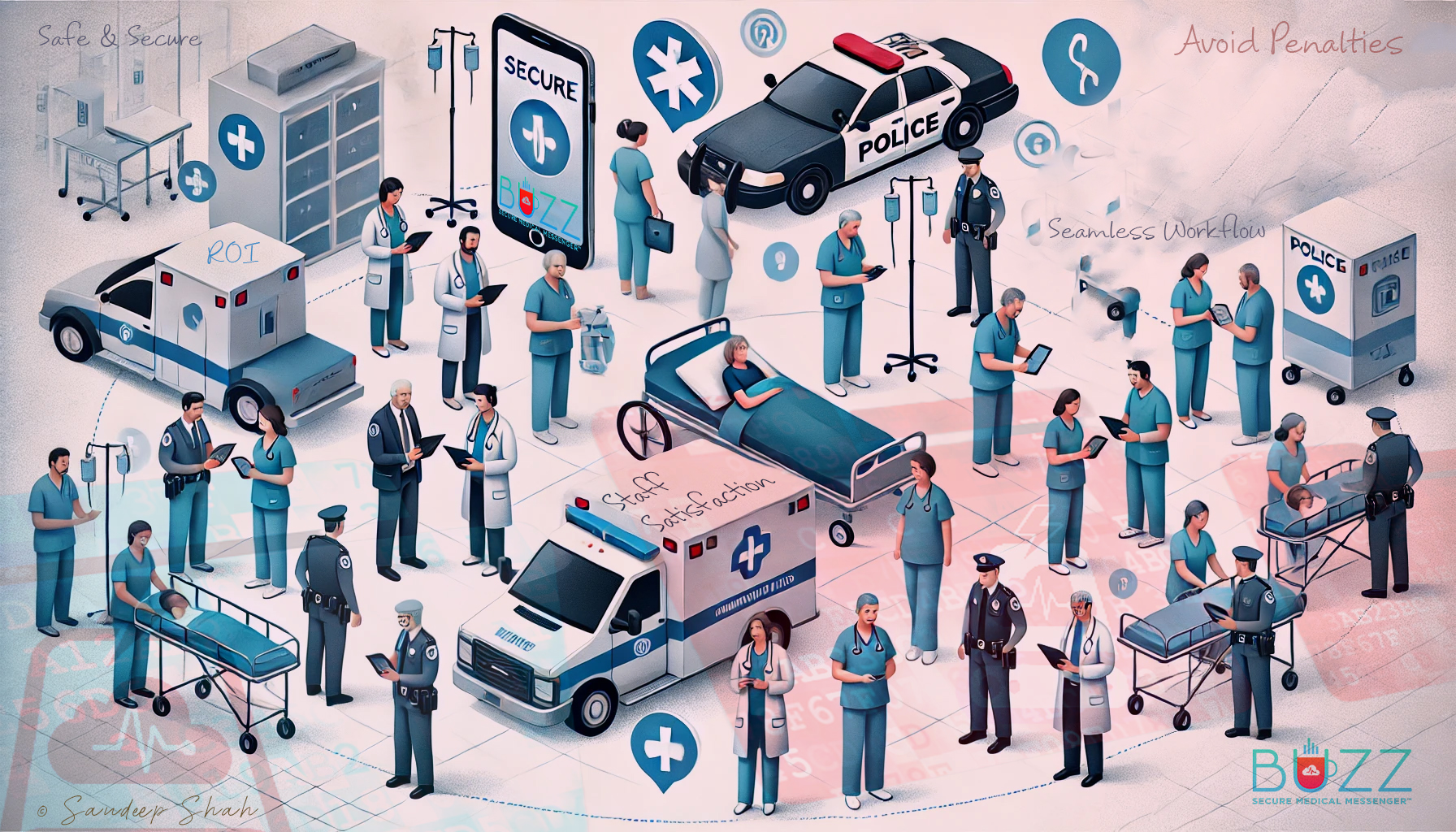
In healthcare, a communication error can mean a missed diagnosis, a medication mistake or worse. Communication tools help, until there are so many dashboards that staff stop using them. One platform for the whole team fixes that.
How the right platform improves efficiency and stays compliant
Communication failures were a factor in 30% of malpractice claims in US hospitals and practices, linked to 1,744 deaths and $1.7 billion in malpractice costs over five years. Reducing that risk starts with the tools. One platform for every use has several advantages over a different app for each.
Protect patient data
HIPAA requires any organization that handles protected health information (PHI) to protect it. PHI covers far more than diagnoses: demographics, phone numbers, genetic information, fingerprints and facial images included.
Providers, health plans, home care agencies and facilities all carry that duty, but not every communication tool is secure. Texts, emails and voice notes between staff and patients need a platform that is encrypted in transit and at rest and built to protect PHI.
Secure multimedia messaging between staff
Phones and tablets are everywhere in healthcare, yet about 80% of hospitals still use pagers. A page says someone is needed and nothing else. Secure multimedia messaging with customizable workflows sends the context with the alert, so a doctor or nurse arrives already briefed.
Better collaboration across the facility
Many errors happen when a patient moves from one clinician to another. One study found that 80% of serious medical errors involved miscommunication between caregivers.
A single platform for video calls, messages, documents and media keeps everyone on the same page whoever is on shift. Support staff can confirm a detail in the thread, and patient files, messages and consent forms sit together.
Work with the channels your team already uses
A unified communication platform brings existing habits inside a secure space instead of replacing them. Some people text, some call. One platform serves both.
Look for real-time messaging, video visits, phone calls, document sharing, automation and clinical knowledge in one place. Fewer tools means faster responses.
Improve patient engagement
Good communication keeps patients involved in their own care, from a first video consultation to appointment alerts.
Engaged patients understand their diagnosis better and follow their treatment plan more closely. Chronic conditions are managed better, complications are spotted earlier, and patients know when to call.
A clear plan also lowers anxiety, which builds trust with the care team. E-signatures and easy access to information save patients a trip to the clinic.
Automated reminders and announcements
Automation sends reminders for appointments, refills and check-ups on time, which takes work off administrative staff. Patients who are reminded show up more often and stay on track with treatment.
Configure it for your care team
Each type of organization communicates differently. A configurable system fits your team’s time, on site or in the field.
Electronic visit verification (EVV), for example, can sit alongside scheduling, and your EHR and other systems can connect to the same platform. Tailoring the system cuts clutter and keeps the communication and administrative controls that matter.
Simplify your healthcare communication with Buzz
The HIPAA Journal describes a case where a nurse did not tell a surgeon that a patient had abdominal pain and a low red blood cell count after surgery. The patient died of internal bleeding that those symptoms pointed to. One reliable place to communicate is how a team keeps that information moving.
Buzz brings that into one platform for care teams and patients: messaging in BuzzChat, calls with a Buzz number in BuzzPhone, video visits in BuzzVideo, files in BuzzDrive, e-signatures in BuzzFlow, scheduling and EVV in BuzzScheduler, clinical answers in BuzzLightning, and EHR and other systems connected through BuzzStreams. Skyscape signs a BAA. See the features or the Buzz FAQ.