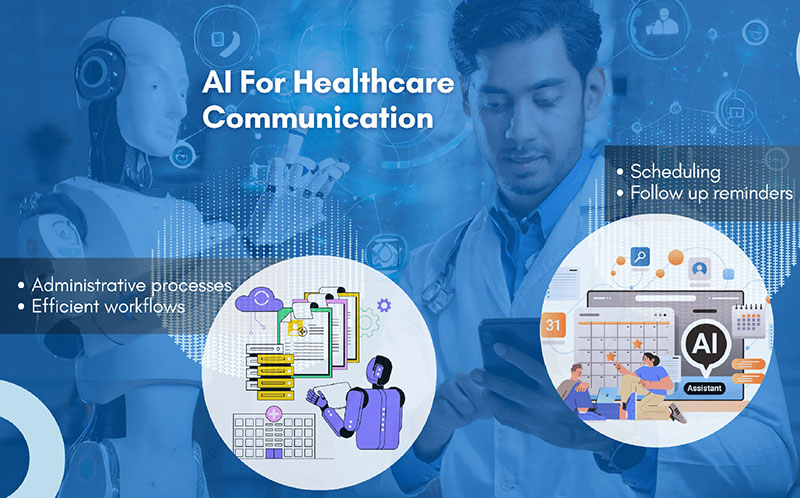
AI has been part of healthcare since the 1970s, when it was first used to help identify treatments for blood infections. Today it shows up in radiology, screening, diagnosis and preventive care. One of its less visible uses is communication: how clinicians and patients reach each other. More on using AI for collaboration in home health.
Common challenges in medical communication
Electronic health records improved the accuracy of medical records. They did not fix communication. Channels are fragmented, leaving gaps in care, follow-up and collaboration between departments, and patients disengage when communication breaks down.
Good communication improves outcomes, revenue and efficiency together. AI can help close the gaps for providers and patients alike.
How AI healthcare communication is improving patient care
Rising patient volume and staff shortages leave physicians and nurses overwhelmed with tasks, applications and information. Communication holds the system together, and AI can help care teams and patients in several ways.
Scheduling and follow-ups
Scheduling and follow-up are common sources of delay. AI can automate reminders, confirmations and rescheduling, which keeps patients engaged in their treatment. Some systems also flag patients who need follow-up and alert both the patient and the provider.
Real-time communication and support
Many clinicians report burnout from the growing volume of patient messages. AI should not replace clinicians or answer every medical question, but a well-trained tool can help.
Some AI tools answer questions only from a defined body of scientifically reviewed medical content. That keeps the answer tied to a source a clinician can check.
That is how BuzzLightning works. It answers clinical questions inside the Buzz conversation the team is already in, drawn from Skyscape’s licensed clinical references, with the source attached to the answer.
Alleviate the cognitive burden of medical professionals
AI can ease the mental load of exam notes, updates and patient inquiries. It works as a collaborator, not as the one talking to your patients.
A study from the University of California San Diego School of Medicine found that AI-drafted replies did not necessarily shorten response time, but significantly eased the cognitive burden of writing personal notes and messages.
Generative AI for efficient workflows
Generative AI drafts text such as reports and responses, which cuts the time clinicians spend on administrative writing.
Improved compassion, empathy, and personalization
Used to draft a reply to a patient message, AI can help a physician write a fuller, more empathetic response than a one-line answer. Clearer messages raise patient satisfaction and reduce gaps in treatment caused by confusion. Every draft still needs a clinician’s review and fact-check.
Bridging language and cultural barriers
AI translation helps clinicians talk about symptoms, care plans and long-term treatment across languages. A family member translating may soften hard news; a translation tool does not. AI can also help caregivers adjust their wording to a patient’s cultural background, which builds trust.
Collaborative threads for patient’s health updates
A shared, secure thread for each patient lets physicians, nurses, lab technicians and caregivers post updates on condition, treatment plan and changes as they happen. Everyone involved in the patient’s care works from the same conversation.
Monitoring health conditions
Some AI tools review readings from sensors and devices a patient uses at home and alert the care team when something changes, sometimes before an adverse event becomes severe. It complements regular care rather than replacing it, and it can give clinicians and home health teams an earlier signal.
AI-powered automation reduces operational costs
Automating routine work such as billing, data entry and scheduling helps cut operational costs and frees clinicians for complex care. AI can also point out where workflows lose time, so resources go where they matter.
How to choose the right healthcare communication platform
AI improves efficiency and patient satisfaction, with limits. Chatbots should never fully replace patient communication; treat AI as a supplement to clinicians.
AI is also only one thing to look for in a communication platform. Look for one place that covers all of your team’s collaboration.
Buzz is a HIPAA-secure platform for everyone in an organization’s care network: administrators, operations, billing, payers, providers and patients. BuzzChat carries messages, images and reports, BuzzPhone handles calls, and BuzzVideo covers video visits. BuzzLightning brings clinical answers into the conversation, and EHR and other systems connect through BuzzStreams. See the HIPAA-secure communication features, or the Buzz FAQ.